
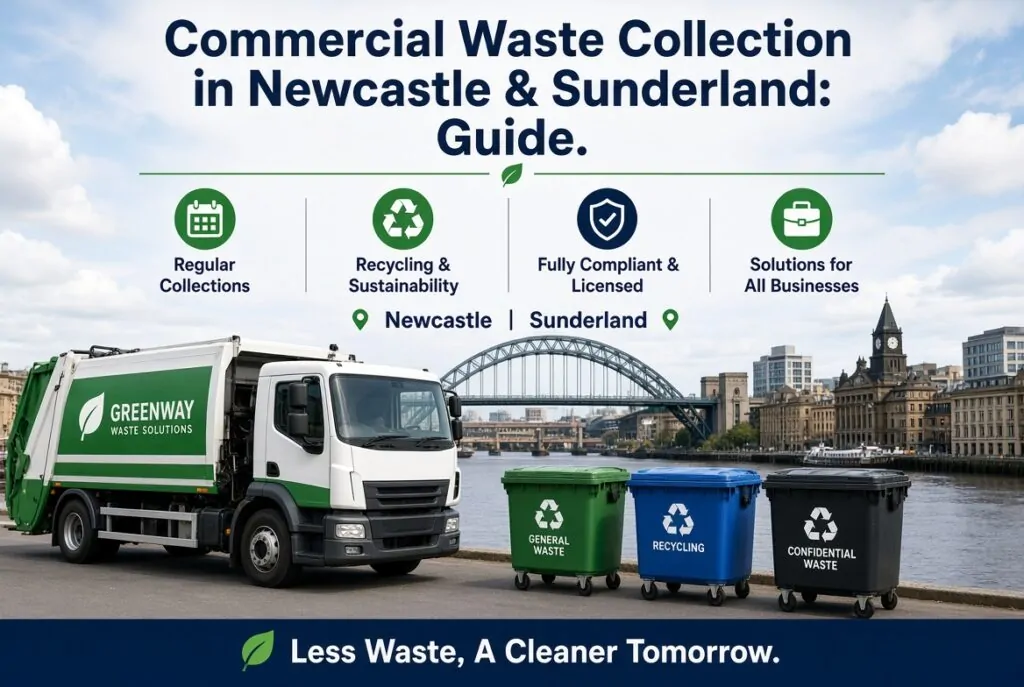
Running a business is busy enough. The last thing you need is overflowing bins or a surprise fine. That is why getting commercial waste collection right matters, whether you run a cafe in Newcastle, a garage in Sunderland or an office in between.
This guide explains what commercial waste is, what the law asks of you and how to choose a reliable service in the North East.
What Is Commercial Waste?
Commercial waste is any rubbish made by a business. It is different from household waste, and councils do not collect it for free.
Examples include
- Cardboard and packaging from a shop
- Food scraps from a restaurant or takeaway
- Paper, printer cartridges, and old computers from an office
- Broken pallets and wood from a warehouse
- Empty paint tins and rags from a workshop
Is It the Same as Business Waste?
Yes. You may hear “business waste collection,” “trade waste,” or “commercial waste service”. They all mean the same thing.
Do Landlords and Charities Count?
Often, yes. Landlords, schools, care homes and charities usually produce waste that is treated as commercial. If you are not sure, ask a licensed waste company to explain.
What Does the Law Say?
In the UK, every business has a duty of care for its waste. That means you must make sure it is stored safely and handed to someone who is allowed to take it. Here are the key rules in simple form.
- Store waste safely. Keep it in secure bins so it cannot blow away or be stolen.
- Use a licensed carrier. Only pass waste to a company with a valid waste carrier licence.
- Keep paperwork. You should keep a waste transfer note for each collection. Most businesses keep these for at least two years.
- Sort your recycling. Rules in England now ask many businesses to separate recyclable waste, such as paper, card, glass, plastic, metal and food waste. The start dates depend on the size of your business, so check the latest guidance on GOV.UK.
What Happens If You Get It Wrong?
If your waste ends up fly-tipped, you can be fined, even if someone else dumped it. That is why checking a carrier’s licence is so important.
Choosing the Right Bins
Your waste company will usually offer a few bin sizes.
- 240 litre wheelie bins: good for small shops and offices
- 660 litre bins: a middle size for busy cafes or small units
- 1100 litre bins: the big metal bins for larger sites
Which Bins Do You Need?
Most businesses need more than one type. A typical set-up might be:
- A general waste bin for things that cannot be recycled
- A dry mixed recycling bin for paper, card, cans and plastic
- A glass bin if you serve drinks
- A food waste bin if you handle food
Example: A Sunderland Cafe
A small cafe near the seafront makes lots of coffee grounds, milk cartons, cardboard and leftover food. By splitting these into food waste, recycling and general waste, the owner may reduce the amount sent to landfill, and may even lower costs because recycling is often cheaper than general waste.
How Much Does Commercial Waste Collection Cost?
There is no single price. Costs depend on:
- How much waste you make. More waste means more or bigger bins.
- How often you need collections. Weekly, fortnightly or one-off.
- The type of waste. Food and hazardous waste can cost more.
- Where you are. Access, parking and distance all play a part.
- Contract length. Some firms offer better rates for longer agreements.
Tips to Keep Costs Down
- Recycle as much as you can
- Flatten boxes before putting them in bins
- Ask staff to use the right bin
- Review your collections every few months
- Avoid paying for bins that are never full
One-Off Clearances for Businesses
Not every business needs regular collections. Sometimes you just need a one-off job, such as:
- Clearing a shop before a refit
- Removing old furniture from a closed site
- Emptying a storeroom or yard
- Taking away building waste after repairs
A local team can arrive, load up, sort the waste and give you the paperwork you need.
How to Pick a Good Commercial Waste Company
Use this simple checklist:
- Check the licence. Ask for the waste carrier licence number and look it up on the Environment Agency register.
- Ask about paperwork. A good company gives you waste transfer notes.
- Get a clear quote. No hidden fees or surprise extras.
- Ask about recycling. A good firm tells you what happens to your waste.
- Choose local. A North East company knows the roads, the councils and the sites.
- Check reviews. Real feedback from other businesses is a good sign.
Why Local Matters in Newcastle and Sunderland
A local firm can usually respond faster, fit round your opening hours and solve problems quickly. You also support jobs in your own community.
Frequently Asked Questions
Can I use my household bin for business waste?
No. Putting business waste in a home bin is not allowed and can lead to a fine.
How often should my waste be collected?
It depends on how fast your bins fill. Food businesses often need weekly collections. Offices may need fewer.
Do I need a contract?
Not always. You can choose regular collections or a one-off clearance.
Conclusion and Next Steps
Good commercial waste collection keeps your business tidy, legal and cost-effective. Know your duty of care, pick the right bins and always use a licensed carrier.
Your next steps:
- Walk round your site and note what waste you make.
- Check how your current waste is collected and who collects it.
- Call Waste Management Solutions NE for a clear, no-pressure quote for your Newcastle or Sunderland business