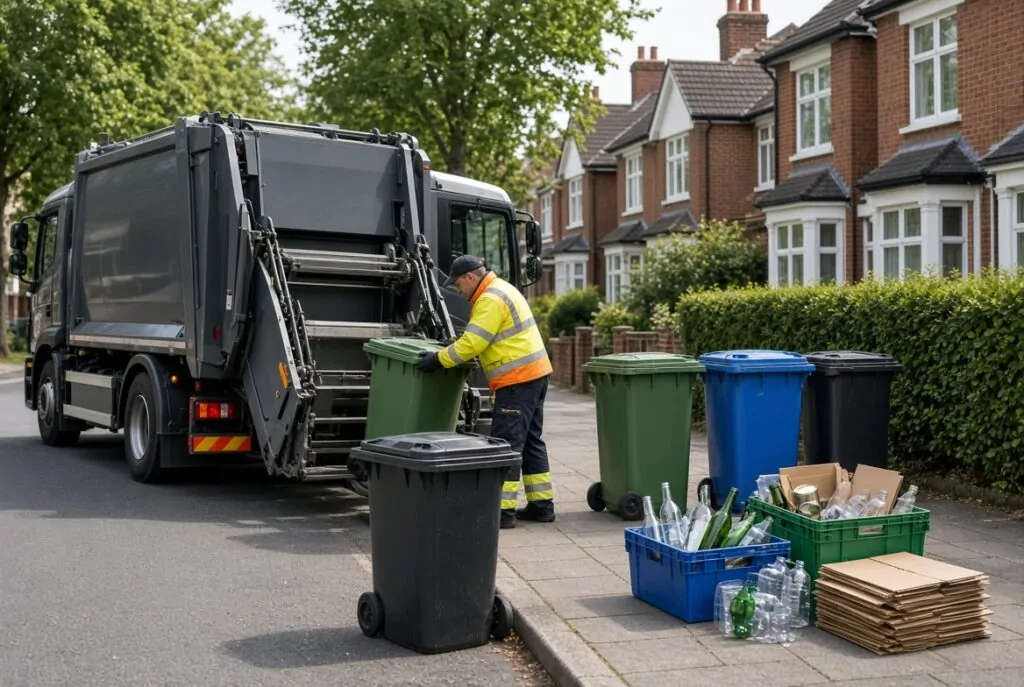
Every day, your home makes rubbish. Think of an empty cereal box, a broken chair, or a bag of old clothes. But where does it all go once the bin lorry drives away? The answer is waste management.
In this guide, we explain waste management in plain English. You will learn what it means, how it works, and what you can do to help. We are Waste Management Solutions NE, a rubbish removal company in South Shields, so we see this every day.
What Does Waste Management Mean?
Waste management is everything that happens to rubbish from the moment you throw it away to the moment it is dealt with. It covers five main jobs:
- Collecting the waste from homes, shops, and offices
- Transporting it in safe, licensed vehicles
- Sorting it into different types
- Recycling or treating what can be used again
- Disposing of what is left in a safe, legal way
You may also hear people say “waste services,” “waste disposal,” or “waste management solutions.” They all point to the same idea: dealing with rubbish in a way that is safe, tidy and kind to the planet.
Why Does It Matter?
Without good waste management, rubbish would pile up in streets, rivers, and parks. It would attract pests, smell bad, and harm wildlife. It would also waste useful materials like metal, paper, and glass that can be turned into new things.
Good waste management keeps our towns clean, protects health, and saves resources. It also helps stop fly-tipping, which is the illegal dumping of rubbish.
The Waste Hierarchy: The Smart Order for Dealing With Rubbish
The UK uses a simple idea called the waste hierarchy. It ranks the best ways to deal with waste, from best to worst. Picture it like a ladder. The higher you stay, the better it is for the planet.
1. Prevent or Reduce
The best waste is the waste that never exists. Buy only what you need. Choose products with less packaging. Carry a reusable water bottle.
2. Reuse
Can someone else use it? A wardrobe you no longer want might be perfect for a neighbor. Charity shops, community groups and online marketplaces love good-quality furniture.
3. Recycle
If it cannot be reused, can it be turned into something new? Paper, card, glass, cans and many plastics can be recycled. So can metal, wood, and electrical items when they are handled properly.
4. Recover
Some waste cannot be recycled but can still be useful. It can be burned in special plants that turn the heat into energy for homes.
5. Dispose
This is the last choice. Waste that cannot be reused, recycled or recovered goes to a licensed landfill site.
The Main Types of Waste
Not all rubbish is the same. Knowing the types helps you put things in the right place.
- Household waste: everyday items from your home, such as packaging, food waste and old toys
- Garden waste: grass, hedge clippings, and branches
- Bulky waste: large items like sofas, mattresses, and wardrobes
- Electrical waste (WEEE): fridges, washing machines, cookers, and TVs
- Commercial waste: rubbish from shops, offices and other businesses
- Construction waste: bricks, soil, plasterboard, and wood from building jobs
- Hazardous waste: things like paint, batteries and asbestos that need special handling
Why Does Sorting Matter?
If different types of waste get mixed together, recycling becomes harder. A greasy pizza box can spoil a whole batch of clean cardboard. That is why councils ask you to use the right bin.
What Happens to Your Rubbish Step by Step?
Let us follow a typical bag of rubbish on its journey.
- You put it out. It goes in your bin or is collected by a rubbish removal company.
- It is collected. A lorry or van takes it away.
- It is taken to a transfer station. Here, waste is checked and sorted.
- It is split up. Metal, paper, plastic and glass are separated.
- Recyclables are sent on. Factories turn them into new products.
- The rest is treated. Some is turned into energy, and the final leftovers go to landfill.
The whole process must follow UK law. Anyone who carries your waste should hold a waste carrier licence, and you can read more about checking this in our guide on how to check a waste carrier licence.
Waste Management vs Rubbish Removal: What Is the Difference?
People often mix these up, so here is a quick way to tell them apart.
Waste management is the big picture: the whole system of collecting, sorting, recycling and disposing.
Rubbish removal is one part of it: a service that comes to your home or business and takes your unwanted items away.
Your council handles regular bin collections. But they will not usually take a broken sofa, a pile of building rubble or a whole house clearance. That is where a local rubbish removal company helps.
Example: A Typical South Shields Home
Imagine a family in South Shields moving house. Their weekly rubbish goes in the normal bins. But they also have an old settee, two mattresses, and a shed full of junk. A local rubbish removal team can collect all of it in one visit, sort what can be recycled and dispose of the rest legally.
How Can You Help at Home?
You do not need to be an expert. Small habits make a big difference.
- Check your council’s guide so you know which bin is for what
- Rinse cans, bottles and plastic tubs before recycling them
- Flatten cardboard boxes to save space
- Donate things that still work
- Never leave rubbish in lanes, car parks or fields
- Book a licensed company for large clearances
What Should You Never Do?
Do not hand your rubbish to someone who knocks on your door offering a cheap clearance. If they dump it illegally, you could be fined, even though you did not do the dumping yourself.
Frequently Asked Questions
What does a waste management company do?
A waste management company collects, transports, sorts, recycles and disposes of waste. Some work with councils. Others, like us, help homes and businesses directly.
Is waste management the same as recycling?
No. Recycling is just one part. Waste management also includes collection, transport, treatment, and safe disposal.
Who is responsible for waste?
Everyone. Under UK law, you have a “duty of care” to make sure your rubbish is passed to someone who will deal with it legally.
Conclusion and Next Steps
Waste management simply means looking after our rubbish in a safe, clean and clever way. By reducing, reusing, and recycling, you help your town and the planet.
Your next steps:
- Check your council bin guide this week.
- Make a list of any bulky items you want gone.
- Contact Waste Management Solutions NE for a free, friendly quote in South Shields and across the North East.