
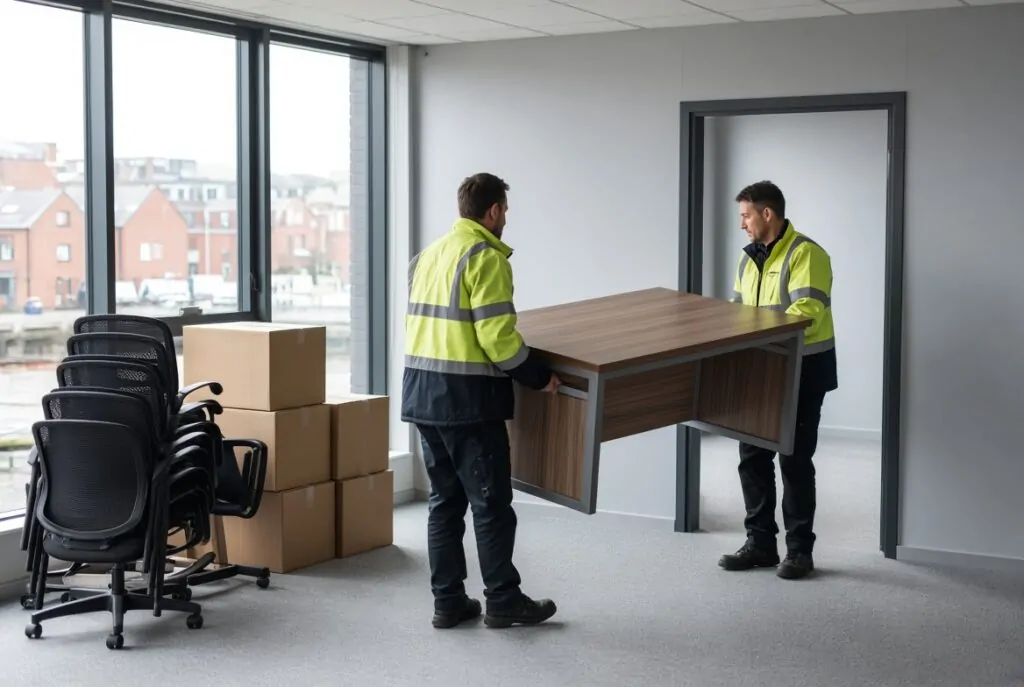
Moving to a new unit? Closing a branch? Or just tired of a storeroom full of old desks? An office clearance can feel like a huge job. The good news is that with a clear plan, it can be calm and quick.
This guide walks you through every step, from the first list to the final sweep, for offices across the North East.
What Is an Office Clearance?
An office clearance means removing everything you no longer need from an office space. This can include:
- Desks, chairs and filing cabinets
- Computers, monitors and printers
- Paper files and confidential documents
- Kitchen items and fridges
- Carpet tiles, partitions and shelves
- General rubbish and packaging
When Do You Need One?
The most common reasons are:
- Moving to a new building
- Closing or downsizing a business
- Handing keys back to a landlord
- Refitting or redecorating
- Clearing out after a long time without a tidy-up
Step 1: Make a Plan
Good planning saves time and money. Start by walking through the office with a notepad or phone.
Make Three Piles
- Keep: things you will use in your next space
- Reuse or sell: items in good condition that someone else could use
- Throw away: items that are broken, outdated or not needed
Set a Date
Check your lease or moving date and work backwards. Aim to finish at least a few days early so you are not rushing.
Tell Your Team
Let staff know what is happening and when. Ask them to clear their own desks and take personal items home.
Step 2: Deal With Paperwork and Data Safely
This step is easy to forget, but it is very important.
- Paper documents: Shred anything with names, addresses, bank details or business secrets.
- Computers and phones: Wipe all data properly before disposal. Deleting files is not enough.
- Hard drives and USB sticks: Ask a specialist about secure destruction if they held private information.
Why Is It So Important?
Under UK data protection rules, businesses must protect personal information. Throwing a box of customer files in a skip could cause a serious problem.
Step 3: Sort Items by Type
Different items need different handling.
Electrical Items
Old computers, monitors, printers and fridges count as electrical waste, often called WEEE. They must not go in normal bins because they contain parts that need careful recycling.
Furniture
Solid desks and good chairs often have a second life. Local charities, schools and start-ups may be glad to take them.
Paper and Card
Clean paper and cardboard can be recycled. Keep it dry and separate from food waste.
General Rubbish
Broken items, old carpet tiles and mixed rubbish can be taken away by a licensed company.
Step 4: Choose a Safe, Licensed Company
This is the part that can go wrong if you pick the wrong person. A cheap offer from someone with no license could end with your rubbish dumped in a lane, and you could be held responsible.
- Ask for their waste carrier licence number
- Check it on the Environment Agency register
- Ask for a written quote
- Ask for a waste transfer note after the job
What Should the Team Do?
A good clearance team will:
- Arrive on time with the right vehicle
- Wear safe clothing and lift correctly
- Protect floors, walls and lifts
- Sort and recycle where possible
- Leave the space clean and empty
Step 5: Think About Access and Timing
Offices often have extra things to plan.
- Lifts and stairs: Tell the team if items must go down several floors.
- Parking: Make sure a van can park close to the entrance.
- Opening hours: Choose evenings or weekends if you want less disruption.
- Building rules: Some buildings need notice or a booking for large loads.
Example: A Gateshead Accountancy Firm
Imagine a small accountancy firm moving to a smaller space. They shred old client files, donate six good chairs to a local charity and book a clearance for the rest. The team collects broken desks, old monitors and cardboard on a Saturday morning, and the keys are back with the landlord on time.
How Much Does an Office Clearance Cost?
Prices change from job to job. These things matter most:
- The amount of furniture and waste
- The type of items, such as electrical or hazardous waste
- Access, including floors, lifts and parking
- Speed, as same-day jobs can cost more
- Whether items can be reused or recycled
How to Save Money
- Sell or donate good furniture first
- Clear small items yourself
- Book early rather than at the last minute
- Ask for one price that covers loading, transport and disposal
Frequently Asked Questions
How long does an office clearance take?
A small office can take a few hours. A large floor may take a day or more.
Can you clear an office on the same day?
Often yes, if the team has space in the diary. Call as early as you can.
What happens to the items taken away?
A good company sorts items and sends reusable and recyclable things on before using landfill.
Conclusion and Next Steps
An office clearance does not have to be stressful. Plan early, protect your data, sort items by type and always use a licensed company.
Your next steps:
- Walk round and make your keep, reuse and throw-away piles.
- Arrange secure disposal for papers and devices.
- Contact Waste Management Solutions NE for a clear quote on your office clearance in South Shields, Newcastle or anywhere in the North East