
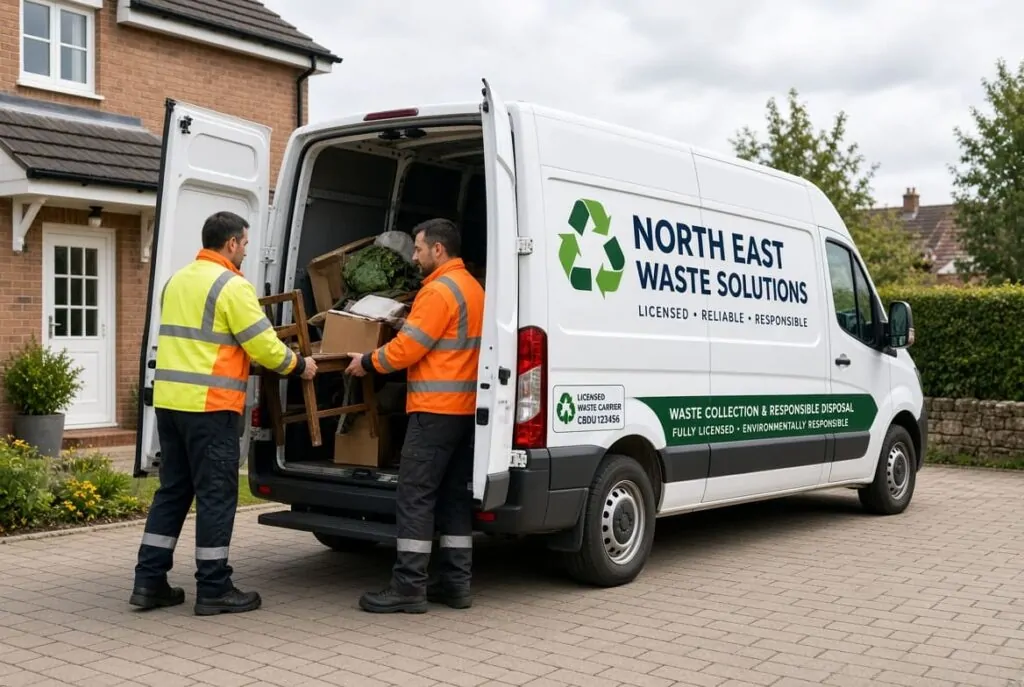
You type “waste removal near me” into your phone and a long list pops up. Some look great. Some look odd. How do you know which one to trust?
This guide gives you a simple checklist for choosing a good local waste removal company, so you get a fair price, a safe service and no nasty surprises.
What Does a Waste Removal Company Do?
A waste removal company collects rubbish that your normal bins cannot take, then disposes of it legally. This includes:
- Furniture, mattresses and appliances
- Garden waste, soil and rubble
- House and office clearances
- Building and DIY waste
- Commercial and business waste
Some companies only do small van loads. Others handle full clearances and regular business collections.
Is It the Same as Waste Management?
Not quite. Waste management is the big system of collecting, sorting and disposing of rubbish. A waste removal company is one part of that system. You can read more in our guide on what waste management means.
Why Does “Near Me” Matter?
Choosing a local company has real benefits.
Faster service. A team nearby can often come the same day or the next day.
Lower travel costs. Shorter journeys can mean fairer prices.
Local knowledge. They know the roads, the tips and the council rules.
Accountability. A company with a local address and a good name has a lot to lose if it does a poor job.
Community. You keep jobs and money in your own area.
Which Areas Do Local Teams Cover?
In the North East, local companies commonly cover South Shields, Jarrow, Hebburn, Boldon, Sunderland, Gateshead, Newcastle and nearby towns. Always check that the company covers your postcode before you book.
The 8-Point Checklist for Choosing a Company
Use these questions every time.
1. Are They a Licensed Waste Carrier?
This is the most important one. Ask for the registration number and check it on the GOV.UK register. Read our guide on how to check a waste carrier licence for easy steps.
A licensed waste carrier should be able to provide its registration details. Do not rely only on a company’s advert or a low quote. Make sure you check the details before handing over your rubbish.
2. Do They Have a Real Local Presence?
Look for a real business address, a landline or clear contact details and a proper website. Be careful with companies that only give a mobile number and no name.
3. Is the Quote Clear?
A good company explains what is included. You should know about:
- Loading and carrying
- Transport
- Disposal fees
- VAT, if it applies
- Any extra charges for stairs or heavy items
Ask for the price in writing before agreeing to the collection. If anything is unclear, ask the company to explain it.
4. Do They Give Paperwork?
Ask for a waste transfer note or receipt. This proves your waste was passed to a legal carrier.
Keep the paperwork after the collection. It gives you a record of who collected the waste and helps you confirm that the job was handled properly.
5. What Do the Reviews Say?
Look at reviews on Google and other sites. Read a mix of good and not-so-good ones. Look for comments about being on time, tidy and honest.
Do not judge a company by its star rating alone. Read what customers say about the actual service, communication and final price.
6. Are They Insured?
Accidents can happen when moving heavy items. Ask if the company has insurance in case something gets damaged.
This is particularly important for larger clearances involving furniture, appliances or items being carried through your property.
7. What Do They Do With the Waste?
A good company sorts items and recycles where it can. Ask what percentage is reused or recycled, or how they handle it.
Different materials need different disposal methods. For example, garden waste may be suitable for composting or processing, while electrical appliances need appropriate handling.
8. Is the Price Fair, Not Just Cheap?
Very low prices can be a red flag. If a company is far cheaper than all the others, ask why.
The cost of a fine for fly-tipped waste is much higher than a fair price. Compare quotes carefully and check that each company is offering the same service before making a decision.
Red Flags to Avoid
Walk away if you see these signs:
- No licence number
- No company name or address
- Cash only and no receipt
- A price that seems far too low
- Pressure to say yes straight away
- Refusing to give a written quote
- Leaflets or social media adverts with no details
A professional company should be happy to answer reasonable questions about its registration, pricing and disposal process.
Example: Two Quotes Compared
Two companies visit Mrs Brown’s house in Hebburn to quote for a garage clear-out.
The first is a little more expensive. It shows a licence number, gives a written quote and offers a waste transfer note.
The second is cheaper, cash only and has no paperwork.
Mrs Brown chooses the first, because she is protected if anything goes wrong.
This example shows why the cheapest quote is not always the best choice. A clear price, proper paperwork and a registered waste carrier can offer greater peace of mind.
Questions to Ask on the Phone
Keep this list handy when you ring around.
- What is your waste carrier registration number?
- Can you come out or give a price from photos?
- What does the price include?
- Do you give a waste transfer note?
- When is the earliest you can collect?
- Do you have insurance?
- What happens to my waste after you take it?
These questions help you compare companies and understand exactly what you are paying for.
How to Get Quick Quotes
You can make the quotation process easier by preparing a few details before contacting local companies.
- Take clear photos of all the waste
- Write a list of heavy items
- Give your postcode and any access details
- Say when you need the job done
Clear information helps a company understand the size of the job and provide a more accurate estimate. Mention any stairs, narrow entrances or difficult access before confirming the booking.
Preparing for Your Collection
A little preparation helps the team do a better, faster job.
- Group items together, ideally near the door or the driveway
- Clear the way so the team can carry safely
- Tell them about hazards, such as sharp items or broken glass
- Keep pets and children away during the work
- Check the paperwork after they finish
If you need help with outdoor rubbish, check whether the company offers garden waste clearance. For businesses arranging regular collections or larger clearances, ask about its commercial waste services.
Frequently Asked Questions
How quickly can a company collect my waste?
Many local companies can collect within a few days, and some offer same-day service. It depends on the diary and the size of the job.
Can I choose the cheapest option?
You can, but check the licence first. A very cheap offer from an unlicensed person can cost you much more in fines.
Do I need to be at home?
Not always, as long as the team can reach the items and you have agreed the price. Many people are home for at least the start of the job.
How can I find a reliable rubbish removal company near me?
Check the company’s waste carrier registration, read customer reviews, compare written quotes and ask for a waste transfer note. Also confirm that the company covers your postcode and accepts the type of waste you need collected.
What information should I provide when requesting a quote?
Provide your postcode, clear photos of the rubbish, a list of large or heavy items and details about access. Tell the company when you need the collection so it can confirm availability.
Conclusion and Next Steps
Choosing a local waste removal company does not have to be hard. Check the licence, get a clear quote, ask for paperwork and trust your instincts.
Your next steps:
- Take photos of the waste you want removed.
- Ring two or three local companies and use the checklist above.
- Contact Waste Management Solutions NE for a licensed, friendly and fairly priced service in South Shields and across the North East.