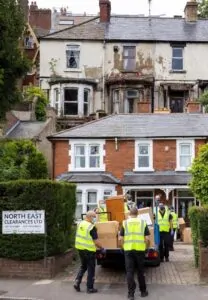
Tyne and Wear residents care about their environment. You can see it in the community recycling initiatives, the clean-up campaigns along the River Tyne, and the way people protect local parks and green spaces. But when it comes to house clearance, recycling often gets overlooked in the rush to get things done. Our environmental commitment ensures proper recycling.
Last month, we cleared a three-bedroom house in Gateshead where the owners were moving to a smaller property. They’d lived there for 30 years and had accumulated everything from furniture to garden equipment to household items. They assumed everything would just go to landfill.
Instead, we sorted through everything carefully. The good quality furniture went to a local charity shop, the metal was recycled at the facility in Jarrow, the garden waste was composted, and only the actual waste went to landfill. We diverted about 70% of the clearance from landfill. Learn about our garden waste clearance services.
Here’s what recycling actually means for house clearances across Tyne and Wear, and why it matters for our local environment.
The Tyne and Wear Environmental Context
Tyne and Wear is densely populated with a mix of urban and suburban areas. From Newcastle city center to the coastal towns of South Shields and Tynemouth, from the residential areas of Sunderland to the industrial heritage of North Tyneside.
This density means waste management is crucial. When waste gets dumped illegally, it affects everyone. We’ve seen fly-tipping near the River Tyne, waste dumped in local parks, and rubbish abandoned in residential areas across the region. Report fly-tipping to Gov.uk fly-tipping portal.
Every item that gets recycled instead of landfilled helps protect our local environment. It reduces pressure on landfill sites, prevents pollution, and supports the circular economy that keeps our communities clean and sustainable.
What Actually Gets Recycled
During a typical house clearance in Tyne and Wear, we find materials that can all be recycled or reused:
During that Gateshead clearance, we found:
- Metal items – old radiators, broken appliances, garden tools – all went to local recycling facilities
- Good quality furniture – went to charity shops in Gateshead and Newcastle
- Books and media – perfect for local libraries and community centers
- Garden waste – composted locally rather than sent to landfill
- Electrical items – taken to WEEE recycling facilities in the area
- Wood and timber – processed for biomass or recycling
Most people don’t realize how much of what they’re throwing away can actually be recycled. Professional clearance services can identify and separate these materials properly. We follow UK waste and recycling guidelines.
Local Recycling Facilities
Tyne and Wear has good recycling infrastructure, but you need to know where to take different materials.
Newcastle has several recycling centers that accept different materials. Gateshead has facilities for metal, wood, and general recycling. Sunderland has comprehensive recycling services. North Tyneside has specific facilities for different waste types.
We know which facilities accept what materials, their opening hours, and their specific requirements. This local knowledge makes recycling more efficient and effective.
During clearances in South Shields, we often take metal to the Jarrow recycling facility, furniture to charity shops on Ocean Road, and garden waste to local composting sites. Each material goes to the most appropriate local facility.
The Legal Side of Recycling
Here’s something many people don’t realize: proper waste disposal and recycling isn’t just about being environmentally responsible – it’s also about legal compliance.
We had a case in Sunderland where the homeowner hired someone from Facebook who offered cheap clearance. Two weeks later, their waste was found dumped near a local park. The homeowner received a £400 fine and had to pay for the cleanup.
Proper waste carriers are registered with the Environment Agency. Our license number is CBDU 486667. You can check any company’s license on the public register – it takes two minutes and protects both you and the environment.
Legal compliance and environmental responsibility go hand in hand. When waste is recycled and disposed of properly, it protects our local environment and keeps you within the law.
Special Materials: Upholstered Furniture
Here’s something specific that affects Tyne and Wear clearances: upholstered furniture now has special disposal requirements.
Since 2023, upholstered domestic seating containing Persistent Organic Pollutants (POPs) must be disposed of separately from general waste. This includes sofas, armchairs, and other upholstered furniture made before certain dates.
We cleared a house in Newcastle last year where we found several old sofas. Instead of taking them to landfill, we had to take them to a specialist facility that handles POPs-containing furniture properly.
Professional clearance companies understand these regulations and have the right disposal routes for different materials.
Reuse Before Recycling
Recycling is good, but reuse is even better. When items can be used again rather than broken down for materials, it saves more energy and resources.
Tyne and Wear has great options for reuse:
- Charity shops across Newcastle, Gateshead, and Sunderland
- Community furniture projects that help people on low incomes
- Online reuse groups and platforms
- Local libraries and community centers for books and media
We cleared a house in Tynemouth last year where we found furniture in excellent condition. Instead of recycling it, we took it to a community furniture project in North Shields that helps families furnish their homes.
Measuring the Impact
We track our recycling impact across Tyne and Wear clearances:
Last year, we diverted approximately 70% of clearance waste from landfill across the region. That’s thousands of items that were reused, recycled, or properly disposed of instead of ending up in landfill.
For every tonne of waste we recycle instead of landfilling, we save approximately 1.5 tonnes of CO2 equivalent emissions. Across hundreds of clearances, that adds up to significant environmental benefits.
The Cost Factor
Many people worry that recycling-focused clearance costs more. Actually, it often doesn’t.
When we recycle metal, we sometimes get paid for it, which helps offset disposal costs. When we donate items to charity, it reduces the amount of waste going to landfill, which saves on disposal fees.
Recycling-focused clearance can sometimes be cheaper than traditional clearance because of these factors. More importantly, it prevents the potential costs of fly-tipping fines and environmental damage.
What Customers Can Do
If you’re planning a house clearance in Tyne and Wear and want it to be as environmentally friendly as possible:
- Choose a licensed waste carrier (check their Environment Agency registration)
- Ask about their recycling and reuse policies
- Set aside items you think might be reusable
- Be honest about any hazardous materials that need special disposal
You don’t need to sort everything yourself – that’s what professional clearance services are for. But choosing the right company makes a big difference to the environmental impact.
Service Coordination
If you need a house clearance in Tyne and Wear and want it handled with maximum recycling and reuse, give us a call on 07868 666337. We’ll ask about the property, what needs clearing, and any specific environmental concerns you have.
We’re Environment Agency approved (CBDU 486667), fully insured, and our team are all trained in proper waste sorting and recycling. We understand Tyne and Wear and are committed to protecting our local environment.
We’ll give you a clear quote, tell you about our recycling practices, and handle everything responsibly. Environmentally-friendly clearance doesn’t have to be complicated – it just has to be done right.