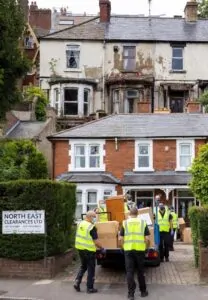
Picture this: It’s 1925, and in a soot-blackened terrace off the Tyne in Jarrow, old Tommy Hargreaves is knee-deep in the remnants of his late father’s life. Brass lanterns from the shipyards, threadbare overalls stiff with pit dust, and a stack of yellowed pay slips from the yards that built an empire. Tommy’s not just clearing a house—he’s sifting through the bones of the North East’s industrial soul. That was house clearance back then: raw, relentless, and rooted in the grit of our region. As the director of Waste Management Solutions NE, with roots tracing back to those very clearances through my grandad’s stories, I’ve seen how this unheralded trade has woven itself into the fabric of places like South Shields, where we started, and now stretches to Darlington’s dales and Sunderland’s shores.
Over three generations, we’ve turned what was once a back-breaking chore into a lifeline for families facing moves, bereavements, or fresh starts. Our license (CBDU 486667) isn’t just paperwork—it’s a nod to the Environment Agency’s standards that echo the tough lessons of our past. In this deep dive, I’ll unpack the century-spanning saga of house clearance in the North East, drawing from family lore, local archives, and the jobs that keep us going. From the slag heaps of yesteryear to today’s eco-savvy sweeps, here’s how it all began—and why it matters for your next clearance in Gateshead or beyond.
The Birth of Clearance: When the Mines Dictated the Mess
House clearance as we know it didn’t spring from thin air; it clawed its way out of the North East’s coal-black underbelly. By the late 1800s, our region was the powerhouse of Britain’s Industrial Revolution—collieries in Durham, shipyards in Newcastle, steelworks in Middlesbrough churning out the world’s wealth. But prosperity bred clutter: families crammed into back-to-backs, hoarding tools, lamps, and heirlooms against the lean times. When a miner passed or a family fled the fells for factory work, clearing out meant hauling cartloads to the nearest tip, often by hand or pony.
My great-grandad, a carter in Hetton-le-Hole, told tales of clearances that doubled as salvage ops. “Lad,” he’d say, “every skip’s a story— and half of ’em pay for the next round.” Waste management was rudimentary; the early dust-yards of the 18th century had trickled north, but here it was all about reuse. Brass from the pits got melted down, timber from terraces repurposed for props. It was clearance born of necessity, foreshadowing our modern recycling ethos. Fast-forward to today, and we’re doing the same in South Shields bungalows: sorting scrap for local smelters, just like grandad did, but with vans instead of carts.
This era’s legacy? A region resilient in rubbish. We’ve cleared sites echoing those old tips, from Washington workshops to Whitley Bay workshops, turning industrial ghosts into habitable homes. For a closer look at how compliance ties back to those roots, our Ultimate Guide to Compliance and Costs breaks it down.
Slum Clearances: The Great Uprooting That Redefined Our Streets
Come the 1930s, the North East’s boom busted hard—unemployment hit 70% in Jarrow’s marches, leaving terraces teeming with families but tumbling into disrepair. Enter the slum clearances: a brutal but bold chapter where house clearance went from personal to public policy. Under acts like the 1936 Housing Act, councils razed thousands of unfit dwellings, from Newcastle’s Scotswood to Sunderland’s East End. It was mass-scale moving: families decanted to new semis, belongings bundled into council lorries.
History’s harsh here—over 50,000 homes cleared in Tyne and Wear alone by 1950, per local records. But amid the upheaval, clearance crews emerged as unsung heroes, salvaging what they could. Furniture to the needy, bricks for rebuilding. My uncle, a council hand in the ’50s, cleared a whole block in Walker; he found wartime ration books and a stash of pre-war porcelain that fetched enough to furnish three rehoused families. It taught us sensitivity—probate clearances today in Darlington echo that, handling heirlooms with the care those clearances demanded.
The Byker Wall in Newcastle? Born from those clearances, a modernist marvel housing folks displaced from the old slums. For the full scoop on Tyneside’s transformation, the Wikipedia on UK Slum Clearances paints a vivid picture. We’ve since cleared sites around such icons, ensuring history doesn’t end up in skips.
Post-War Boom to Green Awakening: Clearance Evolves with the Times
The ’60s and ’70s brought North Sea oil cash and council estate sprawl, but also a waste reckoning. Landfills swelled with the debris of demolitions—from Consett’s steelworks shutdown to Teesside’s chemical castoffs. House clearance shifted: no longer just hauling, but hauling responsibly. The 1974 Control of Pollution Act was our wake-up, mandating licenses for carriers—foreshadowing our own CBDU 486667.
By the ’90s, as shipbuilding faded and call centres rose, clearances became about closure: downsizing dockers in North Shields, emptying empty-nesters in Peterlee. We stepped in then, partnering with outfits like Age UK North East to donate goods, diverting tonnes from tips. One job in Houghton-le-Spring unearthed a miner’s lamp collection—sold at auction for charity, just like those Victorian salvages.
Today’s twist? Eco-focus. With the Waste Duty of Care Code as our bible, we’re zeroing in on circular practices: 75% reuse rates in our Gateshead gigs. It’s history come full circle—from pit waste to pristine recycling.
A Timeline of North East House Clearance Milestones
| Era | Key Event | Impact on Clearance | Modern Tie-In |
|---|---|---|---|
| 1800s | Industrial Boom | Reuse-driven clearances in mining terraces | Our scrap recycling in Durham colliery conversions |
| 1930s-50s | Slum Clearances | Mass relocations, salvage schemes | Sensitive probate work in Sunderland rehousings |
| 1970s | Pollution Act | Licensing for waste carriers | CBDU 486667 compliance across NE |
| 2000s-Now | Eco Regulations | Recycling mandates, charity ties | 70% diversion in South Shields jobs |
This timeline isn’t dusty dates—it’s the blueprint for our services, from hoarder hauls in Hartlepool to full estates in Berwick. Peek at our Insider Secrets from Durham Experts for more regional riffs.
Lessons from the Past: What History Teaches Today’s North East Families
Grandad’s mantra? “Clear with care, or clutter claims you.” We’ve heeded it: Start small—inventory like a pit boss logging shifts. Partner pros—our team’s cleared 1,000+ since ’15, insured to the hilt. And think legacy: Donate to Emmaus North East, turning trash to treasure.
In Gateshead garages or Darlington attics, we’re applying these timeless tricks. Costs? Historical hauls were free labor; now, £200-£1,000 for a terrace, offset by sales. It’s evolution in action.
FAQs: Unpacking North East Clearance Curiosities
Q: How has history changed clearance costs here?
A: From gratis family efforts to pro fees— but our offsets keep it affordable, like grandad’s barters.
Q: Can you handle historical finds?
A: Absolutely; we’ve auctioned relics from Byker clearances, per hazardous guidelines.
Q: What’s the greenest way, post-slum era?
A: Full audits, 80% reuse—honoring our industrial reuse roots.
Q: Covering all spots, from Shields to Stockton?
A: Aye, 50-mile radius, same historical heart.
Clearing a Path Forward: Your History Starts Now
From Tommy’s Jarrow terrace to your next move, house clearance in the North East is more than logistics—it’s legacy-keeping. At Waste Management Solutions NE, we’re proud stewards of that story, licensed and local. Ring 0191 456 7890 or drop an email for a no-fuss quote. Let’s clear the past, claim the future.
Pauline Thompson, Director
Waste Management Solutions NE
Licensed Waste Carrier CBDU 486667